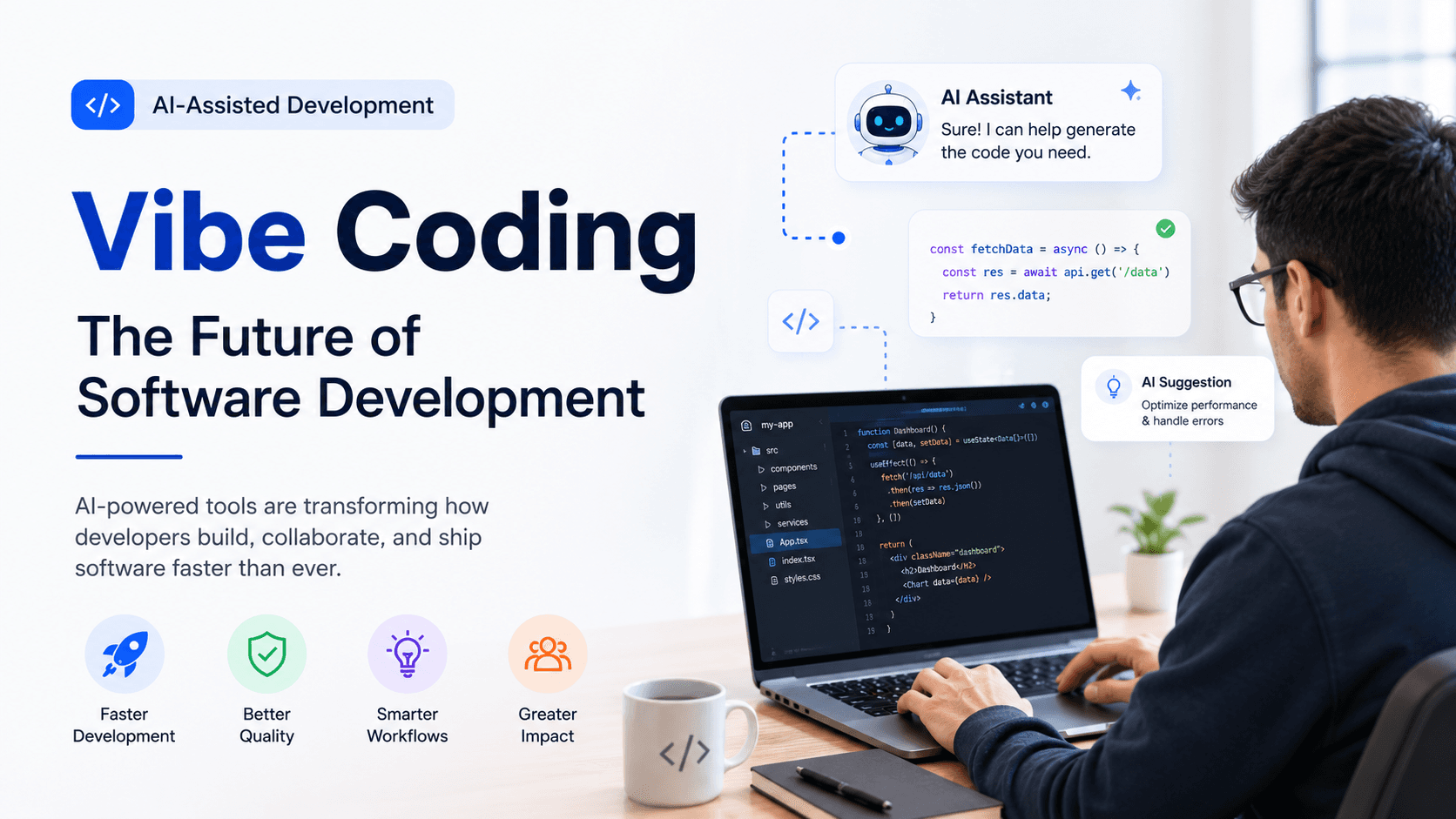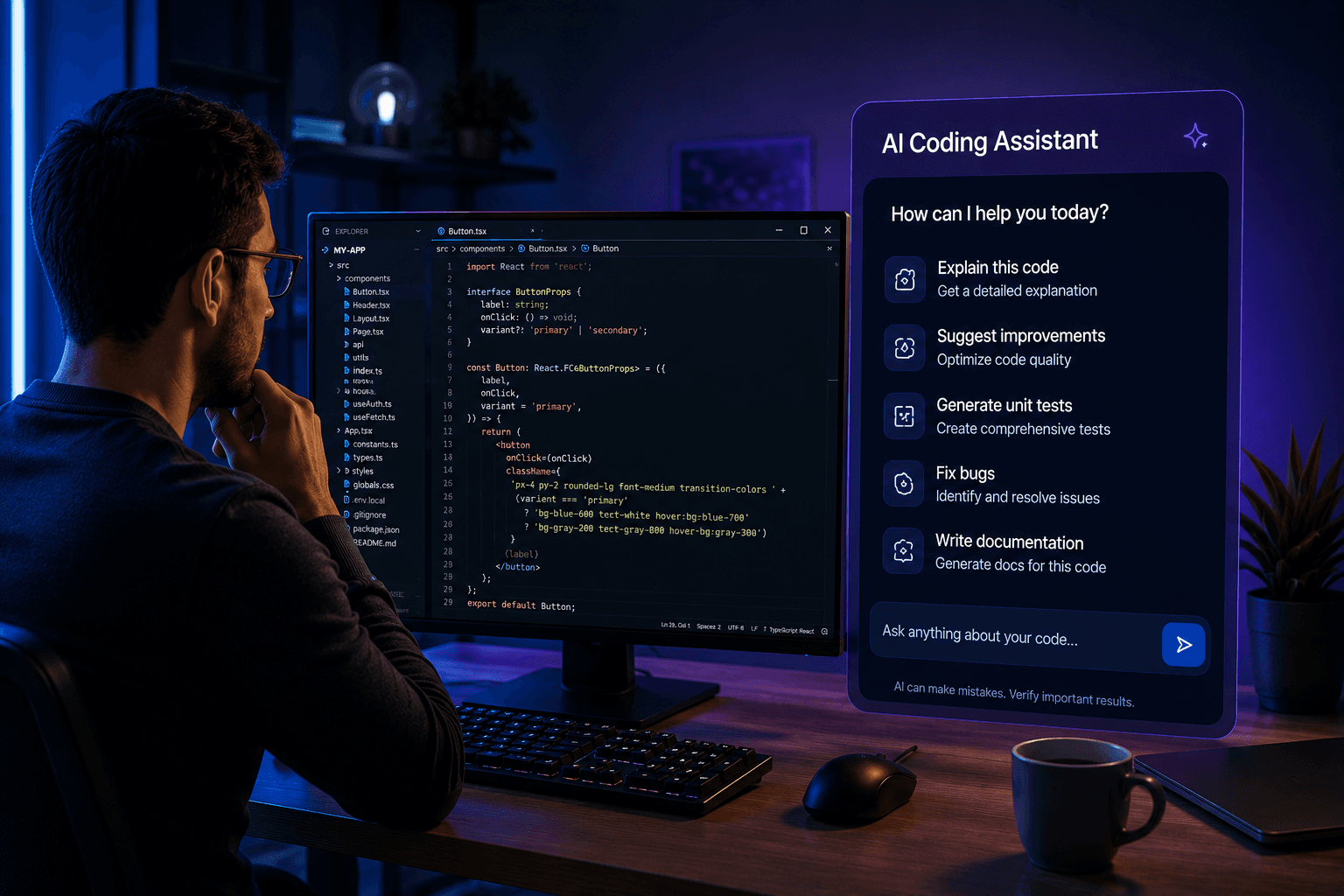
Just a few years ago, AI coding assistants were primarily viewed as intelligent autocomplete tools that could generate boilerplate code or suggest small snippets. In 2026, that perception has fundamentally changed. Modern engineering organizations now treat AI as an engineering teammate capable of reviewing pull requests, generating documentation, identifying architectural concerns, writing integration tests, and accelerating knowledge sharing across teams. The companies gaining the greatest advantage are not replacing developers—they are enabling developers to spend more time solving meaningful business problems while AI handles repetitive engineering tasks.
The Evolution Beyond Code Completion
Today's AI assistants understand entire repositories rather than isolated files. They analyze project architecture, coding standards, business rules, dependency relationships, and historical implementation patterns before making recommendations. This contextual awareness dramatically improves the relevance and accuracy of generated code.
- Generate production-ready APIs following existing project conventions.
- Create comprehensive unit and integration tests.
- Automatically document complex business logic.
- Identify duplicated implementations across repositories.
- Suggest architectural improvements before technical debt accumulates.
Where AI Delivers the Greatest Value
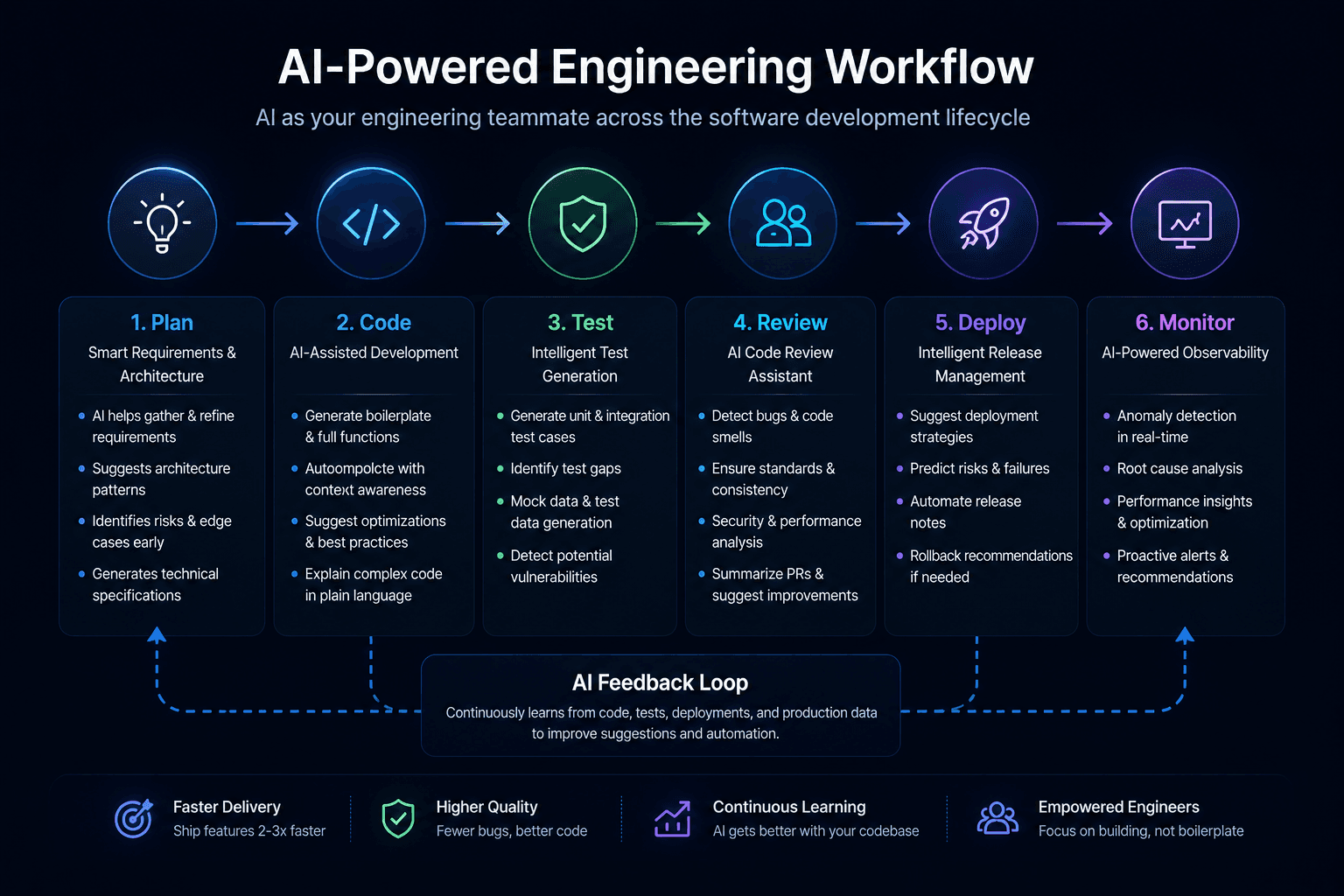
Successful engineering organizations avoid measuring AI by lines of generated code. Instead, they evaluate improvements in delivery speed, onboarding time, software quality, and developer experience. AI delivers its highest value when it removes repetitive work while allowing engineers to focus on design, architecture, and business outcomes.
Architecture Discussions
Before implementation even begins, AI can compare multiple architectural approaches, highlight trade-offs, and surface scalability concerns. Rather than replacing architecture reviews, it provides teams with an informed starting point for technical discussions.
Code Reviews
AI reviews every pull request for consistency, security vulnerabilities, performance regressions, naming conventions, and framework best practices. Human reviewers can then concentrate on business logic, product decisions, and long-term maintainability.
- Detect potential SQL injection vulnerabilities.
- Identify inefficient database queries.
- Recommend framework-specific optimizations.
- Highlight missing edge-case testing.
- Verify coding standard compliance automatically.
Developer Onboarding
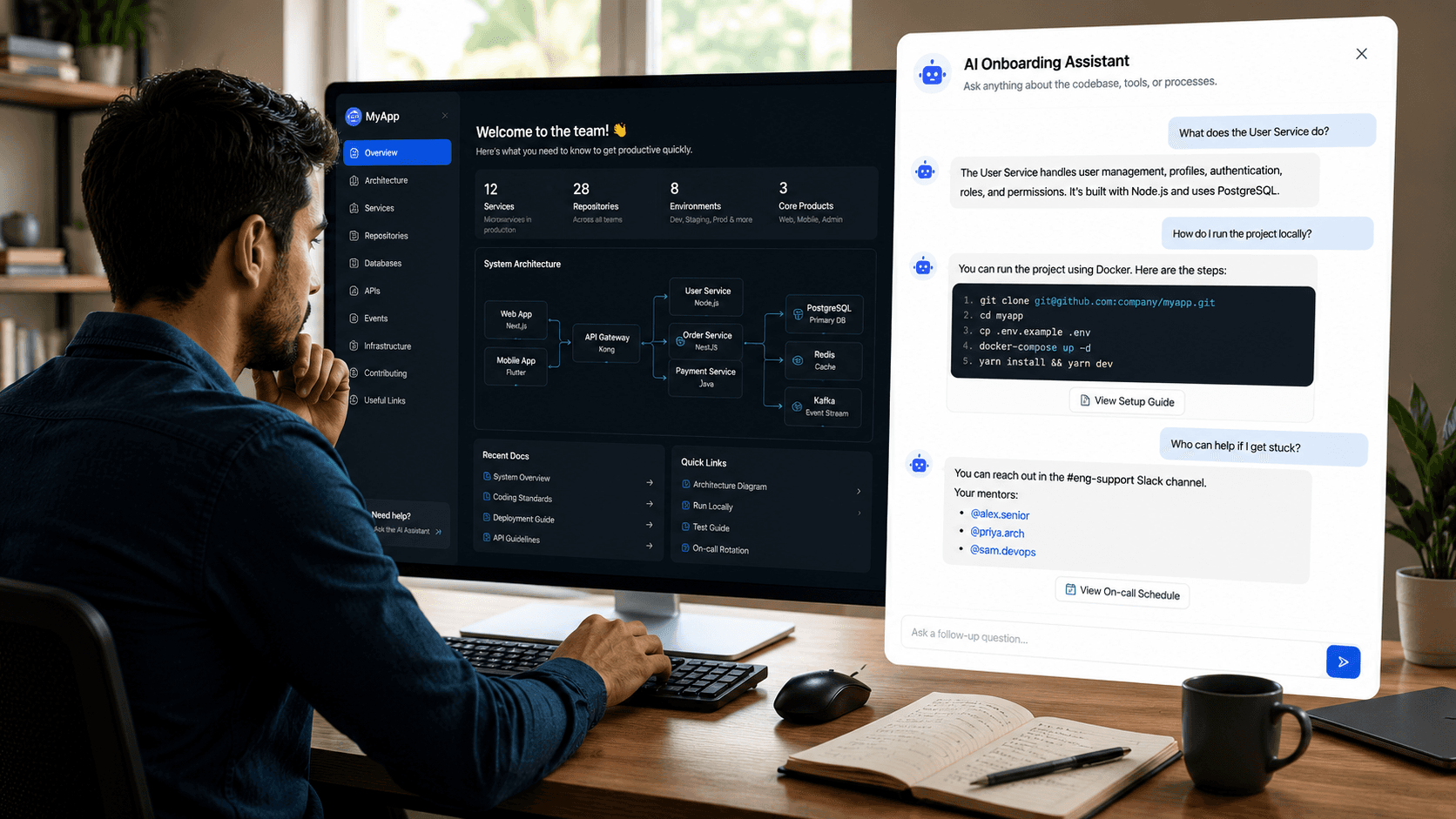
One of AI's most valuable contributions in 2026 is accelerating developer onboarding. New engineers can ask repository-specific questions in natural language instead of spending weeks searching documentation or interrupting senior developers.
What AI Still Cannot Replace
Despite remarkable progress, AI cannot understand business priorities, customer expectations, organizational politics, regulatory obligations, or strategic product direction. Engineering remains fundamentally a human discipline that balances technical excellence with business realities.
- Product strategy.
- Architecture ownership.
- Customer empathy.
- Engineering leadership.
- Technical decision-making.
- Mentorship.
- Innovation.
Building an AI-First Engineering Culture
Organizations that successfully adopt AI establish clear engineering guidelines. Every AI-generated contribution is reviewed, tested, and validated using the same quality standards as manually written code. AI becomes a productivity accelerator—not an excuse to compromise engineering discipline.
- Always review AI-generated code.
- Validate generated tests.
- Keep security scanning mandatory.
- Protect proprietary source code.
- Document AI usage policies.
- Continuously train developers on responsible AI adoption.
Key takeaways
- AI assistants now support the complete software development lifecycle.
- Developer productivity gains come from reducing repetitive work rather than replacing engineers.
- Human judgment remains essential for architecture, business decisions, and leadership.
- Organizations should establish governance for responsible AI adoption.
- Engineering teams that effectively combine human expertise with AI assistance will outperform competitors in both delivery speed and software quality.
Conclusion
The future of software engineering isn't AI versus developers—it's AI working alongside developers. In 2026, the most successful engineering organizations treat AI as a trusted collaborator that enhances creativity, accelerates delivery, and improves software quality without replacing the critical thinking, experience, and innovation that only skilled engineers can provide.