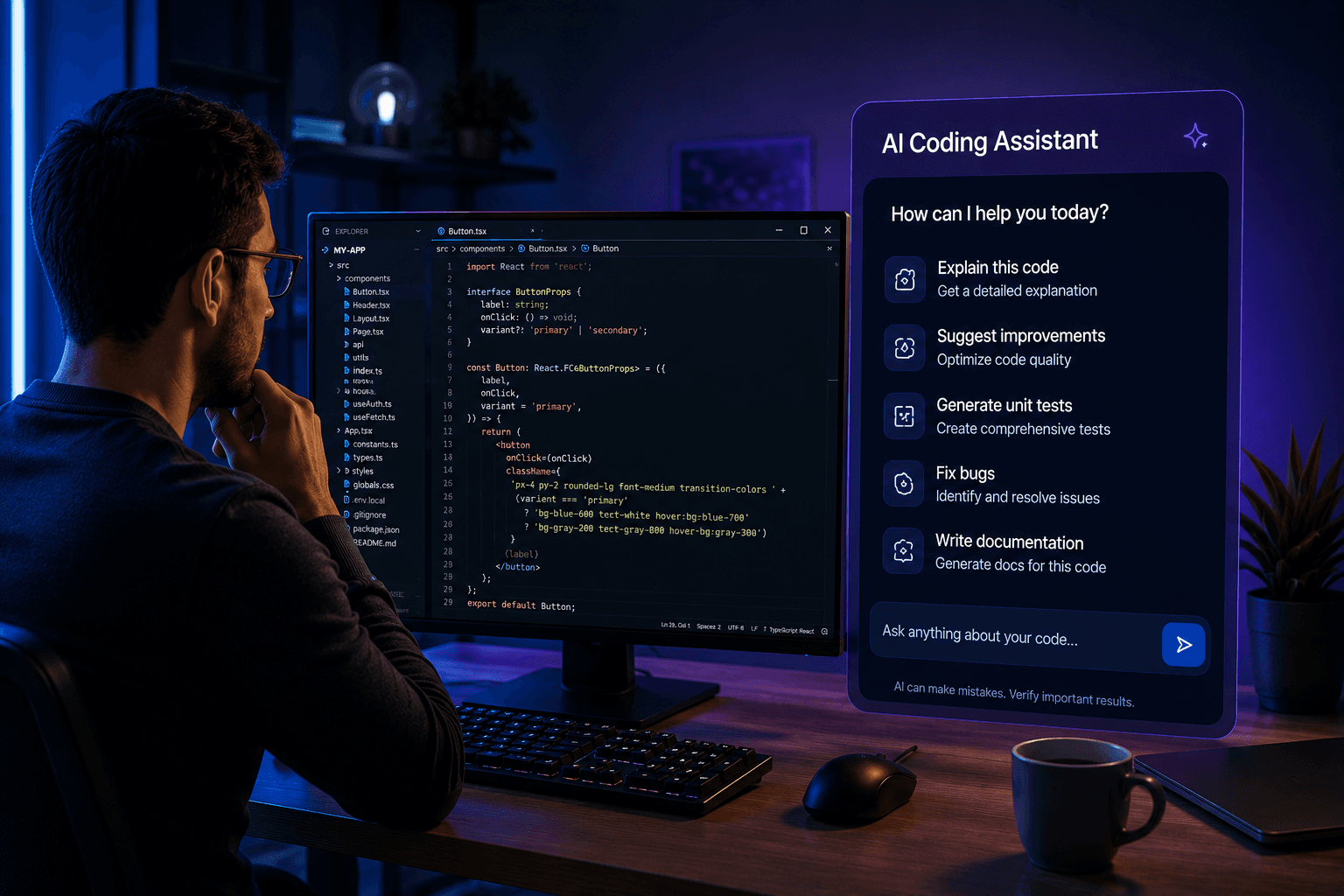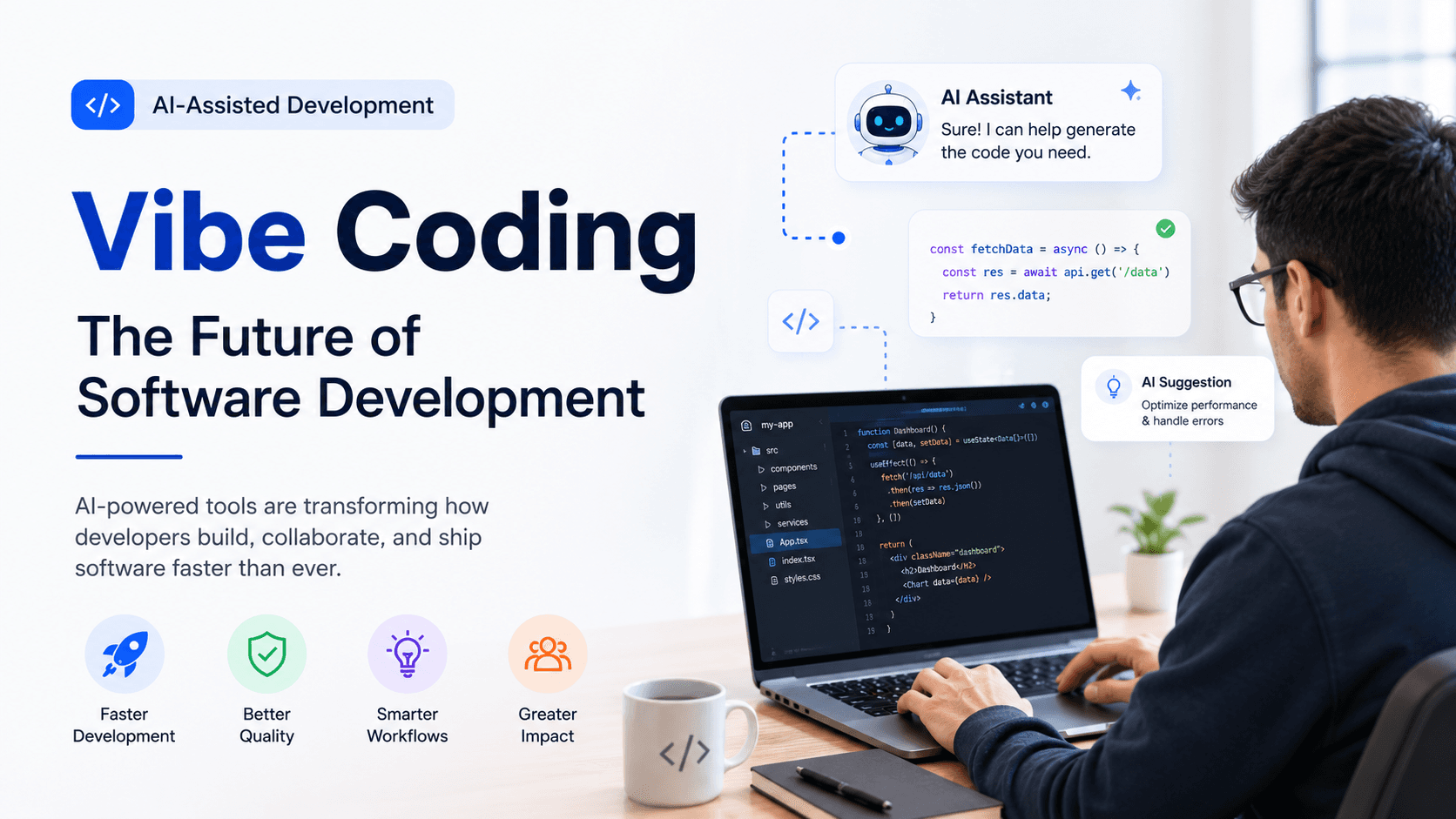
Software development is evolving faster than ever. With modern AI coding assistants capable of generating production-ready code, developers are increasingly shifting from manually writing every line to describing what they want and allowing AI to generate much of the implementation. This emerging workflow has become widely known as 'vibe coding'. While it significantly improves development speed, it also raises an important question: can AI-assisted coding replace traditional software engineering? The answer is more nuanced than many headlines suggest. Rather than competing approaches, vibe coding and traditional software development solve different problems and work best together.
What is Vibe Coding?
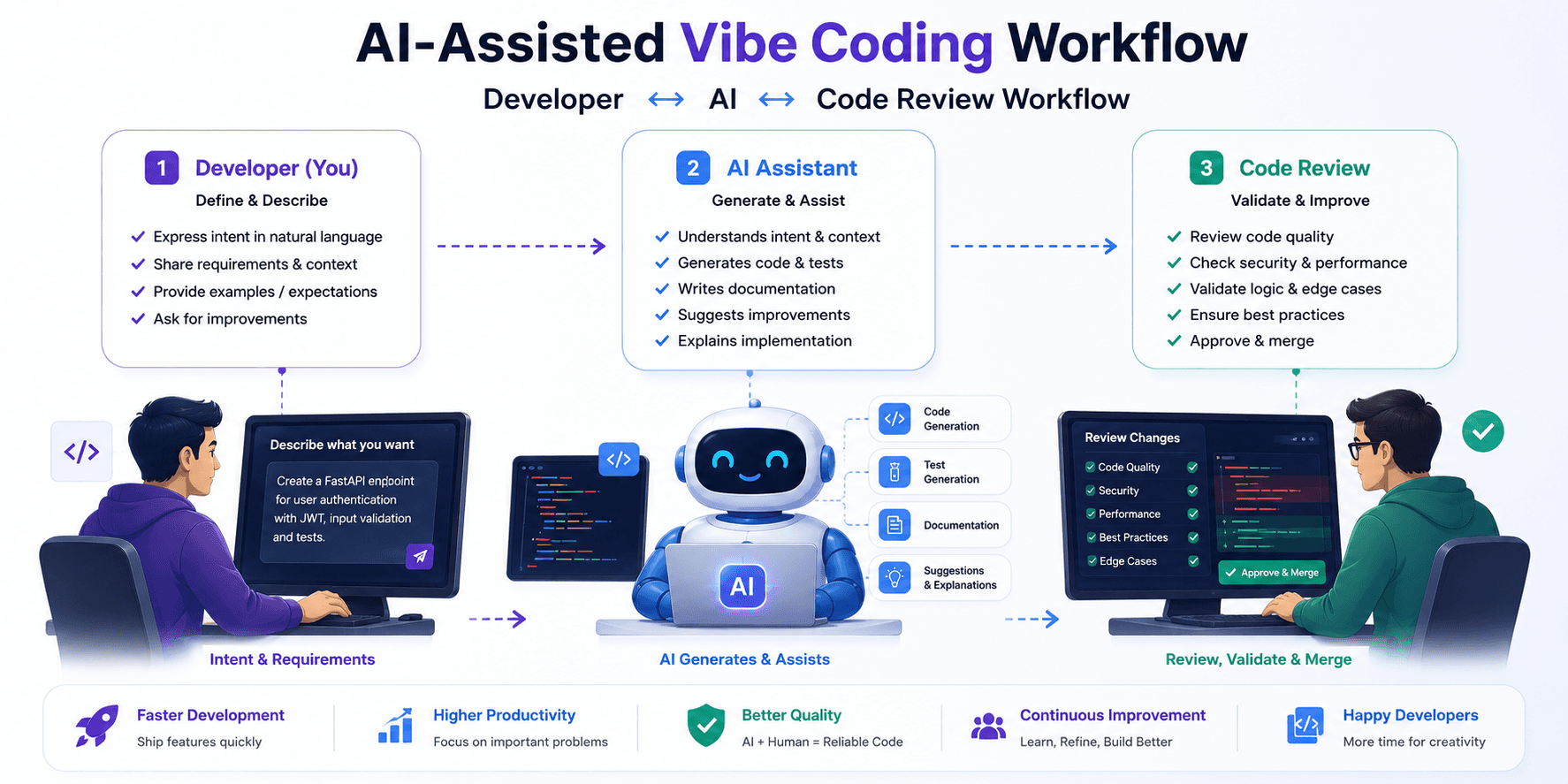
Vibe coding is an AI-assisted software development approach where developers focus on describing business requirements and desired functionality while AI generates code, tests, documentation, and implementation suggestions. Instead of spending time writing repetitive boilerplate or looking up syntax, developers guide the AI through prompts, review the generated output, and iterate quickly. The emphasis shifts from typing code to validating solutions and making engineering decisions.
- Developers describe intent instead of writing every implementation manually.
- AI generates boilerplate, APIs, tests and documentation.
- Rapid iteration significantly reduces development time.
- Developers focus more on solving business problems than syntax.
- Human review remains essential before deploying production code.
Why AI-Assisted Development is Growing So Quickly
The popularity of AI-assisted development isn't driven by hype alone. Engineering teams are adopting AI because it eliminates repetitive work and accelerates routine development tasks. Modern coding assistants can scaffold applications, generate CRUD APIs, explain unfamiliar code, write unit tests, suggest refactoring opportunities and even identify potential bugs. Instead of replacing developers, these tools increase individual productivity, allowing teams to deliver software faster while spending more time on architecture, product thinking and user experience.
- Faster feature development.
- Reduced repetitive coding tasks.
- Instant code explanations.
- Automatic unit test generation.
- Improved developer productivity.
- Faster onboarding to new technologies.
Where Traditional Software Engineering Still Matters
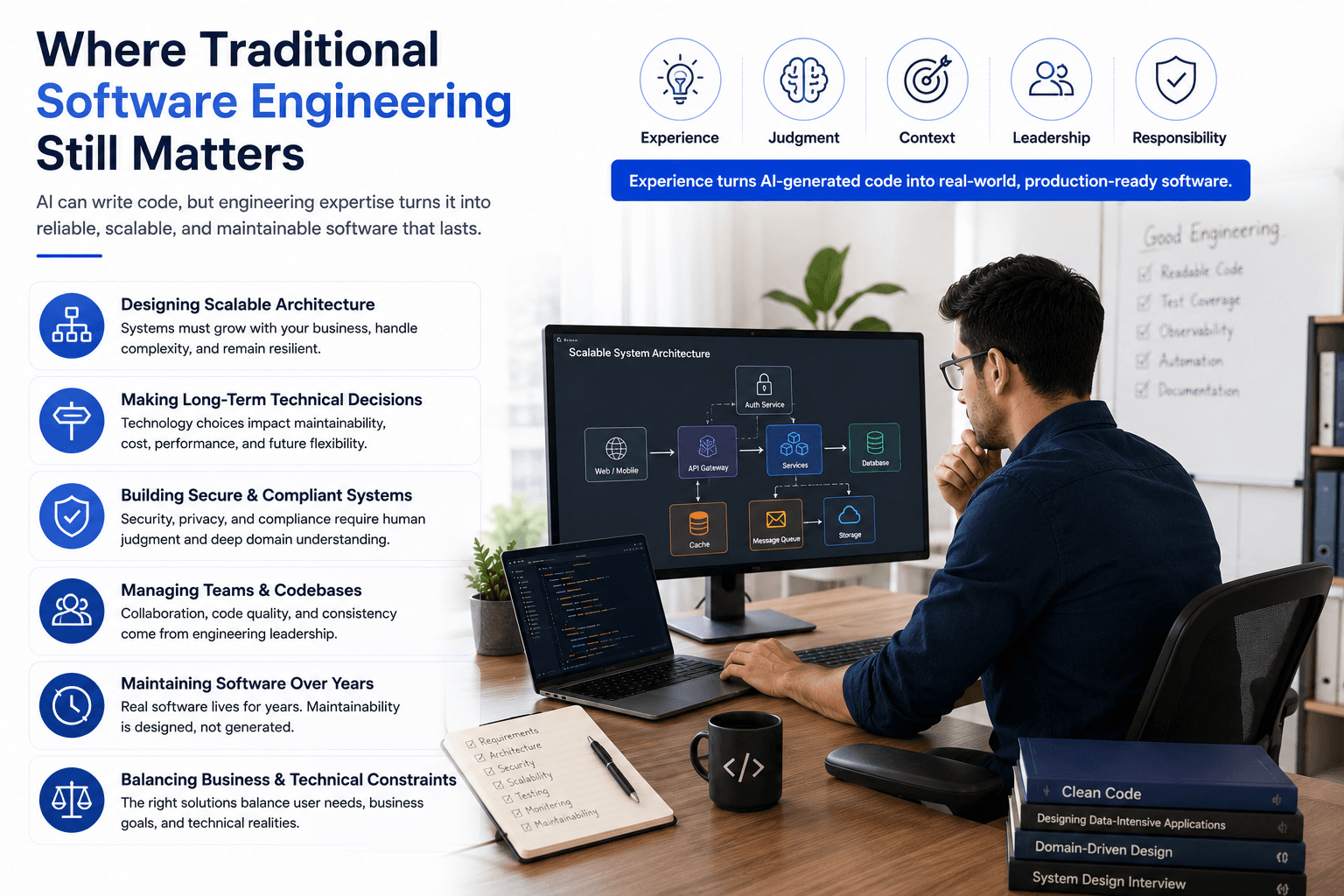
While AI coding assistants have become remarkably capable, building production-grade software requires far more than generating code. Modern software systems must remain scalable, secure, maintainable and reliable as teams, customers and business requirements evolve. These responsibilities depend on architectural thinking, engineering judgment and experience—areas where human expertise continues to play the primary role. AI can accelerate implementation, but it cannot fully understand business context, organizational constraints or long-term technical strategy.
- Designing scalable software architecture.
- Making long-term technical decisions.
- Building secure and compliant systems.
- Managing distributed teams and codebases.
- Maintaining software over multiple years.
- Balancing business requirements with technical constraints.
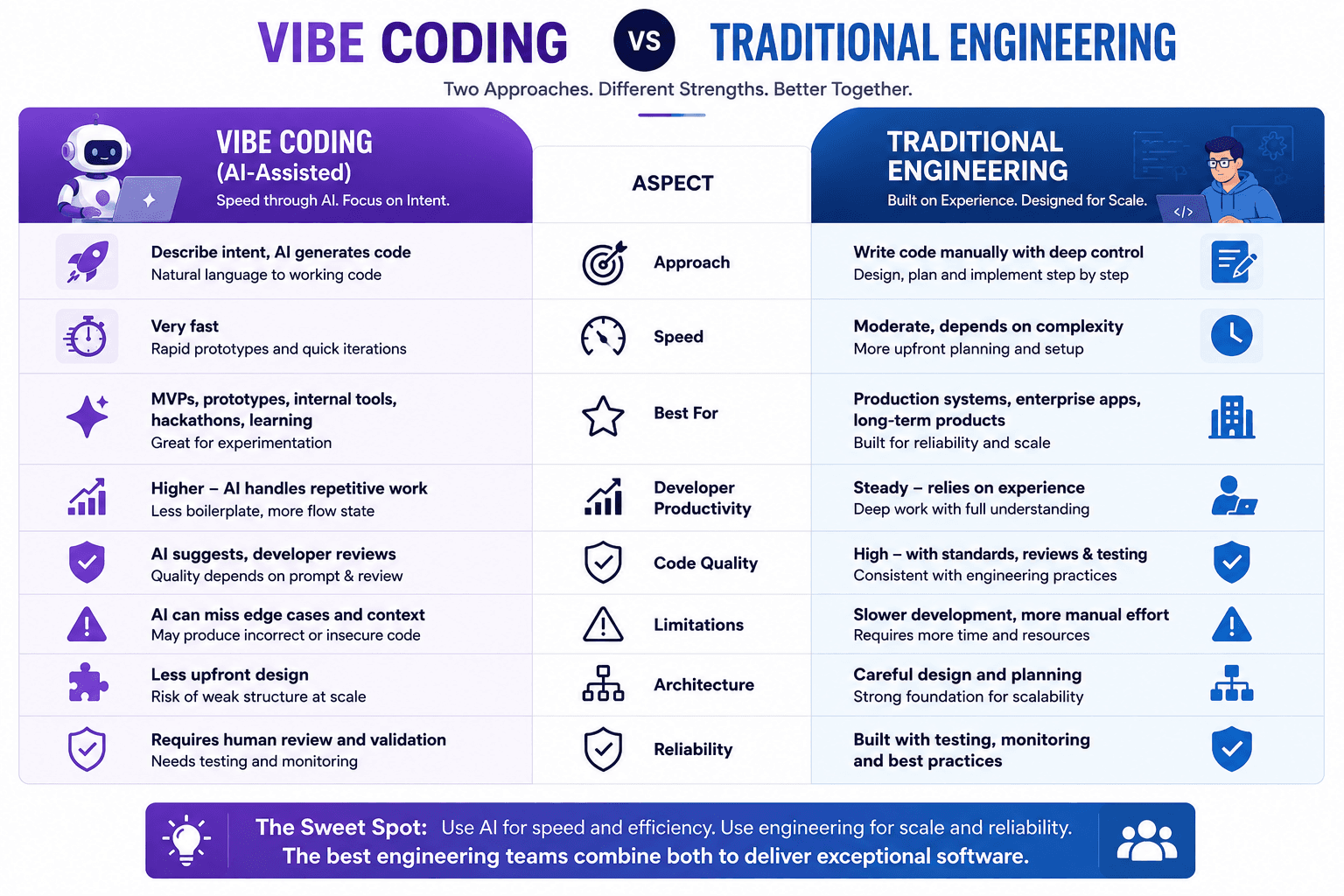
Vibe Coding vs Traditional Software Development
Rather than replacing one another, vibe coding and traditional engineering represent different stages of the software development lifecycle. AI-assisted development excels at increasing developer velocity, whereas traditional engineering ensures software remains reliable, maintainable and scalable throughout its lifecycle.
- Vibe coding emphasizes speed and rapid iteration.
- Traditional engineering emphasizes stability and maintainability.
- AI accelerates implementation.
- Engineers validate architecture and business logic.
- AI reduces repetitive work.
- Engineering ensures software remains sustainable over time.
The Limitations of AI-Generated Code
Although AI generates impressive code, it operates using patterns learned from existing software rather than understanding the complete business context behind an application. Generated implementations may compile successfully while introducing hidden performance issues, security vulnerabilities, duplicated logic or architectural inconsistencies. Without experienced engineering review, these problems often surface later in production when they become significantly more expensive to fix.
- AI does not fully understand business requirements.
- Generated code may introduce security risks.
- Architectural consistency still requires human review.
- Performance bottlenecks may not be immediately obvious.
- Long-term maintainability depends on engineering discipline.
- Every AI-generated change should undergo proper code review.
How High-Performing Engineering Teams Use AI
Leading engineering organizations don't view AI as a replacement for developers—they treat it as an intelligent engineering assistant. Developers rely on AI for repetitive implementation work while continuing to own architectural decisions, code quality, testing strategies and system reliability. This balanced approach enables teams to deliver software faster without compromising engineering standards.
- Generate boilerplate and repetitive code using AI.
- Review all AI-generated code before merging.
- Maintain architecture and coding standards.
- Automate testing while validating business logic manually.
- Use AI for documentation and refactoring assistance.
- Treat AI as a productivity tool rather than an autonomous developer.

The Future Isn't AI vs Developers
Much of the discussion around AI in software development is framed as a competition between developers and machines. In reality, the industry is moving toward collaboration rather than replacement. AI excels at accelerating implementation, while developers continue to provide the creativity, critical thinking, domain knowledge and engineering judgment required to build successful products. Organizations that effectively combine both approaches will deliver software faster without compromising quality.
- AI accelerates implementation rather than replacing engineers.
- Developers remain responsible for architecture and technical decisions.
- Business knowledge cannot be generated by AI alone.
- Engineering experience is essential for building scalable systems.
- The future belongs to AI-augmented engineering teams.
Best Practices for Adopting Vibe Coding
Organizations adopting AI-assisted development should establish clear engineering practices rather than relying solely on generated code. Successful teams integrate AI into existing development workflows while maintaining code reviews, automated testing, architectural documentation and security validation. AI becomes most valuable when it complements disciplined engineering rather than replacing established software development processes.
- Review every AI-generated code change.
- Maintain consistent coding standards across projects.
- Invest in automated testing and CI/CD pipelines.
- Document architectural decisions clearly.
- Protect sensitive business and customer data when using AI tools.
- Use AI to improve productivity—not to bypass engineering discipline.
When Should You Choose Each Approach?
Choosing between vibe coding and traditional software engineering depends on the problem you're solving. AI-assisted development is ideal when rapid experimentation, prototyping and faster delivery are the primary goals. Traditional engineering becomes increasingly important as software grows in complexity, team size and business impact. The most successful organizations know when to prioritize speed and when to prioritize long-term maintainability.
- Use vibe coding for MVPs, prototypes and internal tools.
- Use traditional engineering for enterprise and mission-critical applications.
- Combine both approaches for long-term product development.
- Allow AI to handle repetitive implementation work.
- Let experienced engineers guide architecture and product direction.
Key takeaways
- Vibe coding significantly improves developer productivity.
- AI excels at generating boilerplate, documentation and repetitive implementation.
- Traditional software engineering remains essential for scalable, secure and maintainable systems.
- Architecture, business understanding and engineering judgment continue to require human expertise.
- The highest-performing engineering teams combine AI-assisted development with disciplined engineering practices.
- The future of software development is AI-augmented engineering—not AI replacing software engineers.
Conclusion
AI has fundamentally changed how software is built, but it hasn't changed what makes software successful. Reliable systems still depend on thoughtful architecture, strong engineering practices, effective collaboration and continuous improvement. Vibe coding enables developers to move faster and eliminate repetitive work, while traditional software engineering ensures products remain secure, scalable and maintainable for years to come. Rather than choosing one approach over the other, successful engineering organizations embrace both—using AI as a force multiplier while continuing to invest in the engineering fundamentals that build exceptional software.